
The broker’s corporate disclosure was reviewed by identifying all entities presented on its official website and checking their incorporation records against available company registries. The assessment is limited to company formation details, focusing on whether each entity provides sufficient registration information for independent verification.
DB Invest Limited
DB Invest (MY) Limited
DBInvest Financial Services LLC
DB Pay Ltd
DB Group Holding Limited
The group structure outlines several legal entities under DB Group Holding, each presented with regulatory references tied to their respective jurisdictions. These references confirm that the entities are authorized to operate within those regions. However, the identifiers provided are tied to regulatory licenses rather than company registration records. A license number does not serve as proof of incorporation, as company registration is issued separately through official corporate registries.
Because registration numbers are not clearly disclosed, verification depends on manual searches using entity names. This limits direct confirmation and prevents consistent validation across all listed entities using a single, reliable identifier. No conflicting information was found, but the absence of formal registration details reduces clarity on each entity’s legal record.
The score aligns with the “Published partially, and is difficult to verify” tier. Entity names are disclosed, but the lack of clearly stated company registration numbers across the group restricts independent verification and does not meet the standard required for higher ratings.
DB Invest Limited was assessed based on its official registered jurisdiction as disclosed by the broker and mapped against the COR Jurisdiction Framework.
The confirmed legal entity, DB Invest Limited, is registered in Seychelles, which is classified under Tier 3 in the COR jurisdiction framework. Other entities within the group structure are incorporated in different jurisdictions; however, these are separate legal registrations and do not alter the classification of the primary trading entity considered in this assessment.
The Seychelles jurisdiction provides a formal corporate registration framework that supports company incorporation under local law. In a registration context, it is commonly used for offshore business structuring, with straightforward incorporation processes compared to higher-tier financial centers.
Under the COR criteria, the score is anchored to the highest verified registration tier of the assessed entity. Since DB Invest Limited is solely registered in a Tier 3 jurisdiction with no Tier 1 or Tier 2 incorporation applicable to the same legal entity, the result aligns with a 2/5 rating under “Tier 3 Jurisdiction Only.”
We reviewed DB Investing’s regulatory disclosures by matching each listed license against official regulator records and entity-level registration data. Each entry was checked for completeness of regulatory identifiers and confirmed against available registry sources. The focus remained on whether the disclosures allow clear and independent validation of the licenses issued to each entity.
Legal Entity | Regulator | License Number | Status |
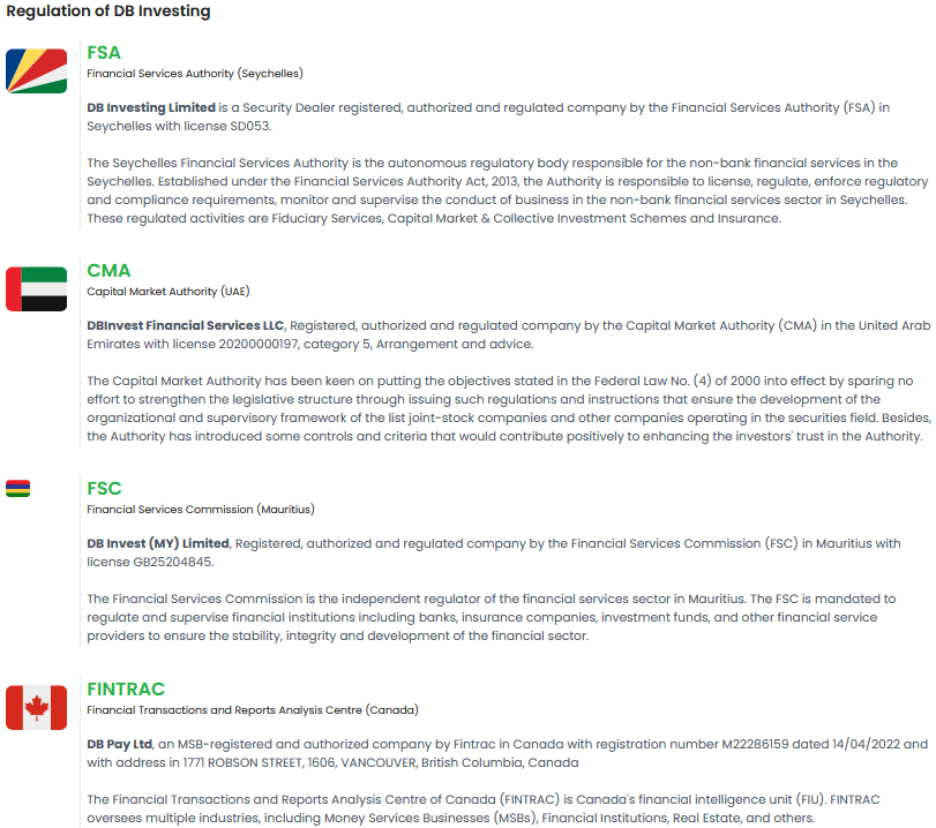
DB Invest Limited | Financial Services Authority (Seychelles) | SD053 | Licensed and active |
DB Invest (MY) Limited | Financial Services Commission (Mauritius) | GB25204845 | Licensed and active |
DBInvest Financial Services LLC | Capital Market Authority (UAE) | 20200000197 | Licensed and active |
DB Pay Ltd | FINTRAC (Canada) | M22286159 | Registered (MSB) |
Each entity provides complete regulatory identifiers. The regulator name, license number, and jurisdiction are clearly stated and can be matched directly with official records. This level of disclosure allows straightforward verification without gaps in core licensing details.
The scope of authorization is also disclosed in the UAE and Canada entries. The UAE license under the Capital Market Authority carries a defined Category 5 permission set that covers arrangement and advisory activities. It does not extend to full brokerage execution. The Canadian MSB registration applies to payment and money service operations under FINTRAC oversight. These scope definitions are clearly stated alongside the license information.
All licenses remain verifiable through official regulatory databases using the provided identifiers. No missing license numbers or unclear entity references affect the traceability of the records.
This aligns with the COR standard for “Licensed and Fully Verified” (5/5). The disclosures are complete, clearly structured, and independently verifiable at the regulator level. The scope of each authorization is also transparently defined, supporting full clarity in the licensing structure without affecting verification completeness.
Upon examining the regulatory reputation, the framework was assessed based on the supervisory strength and credibility of the disclosed authorities.
The structure is centered on an offshore regulator in Seychelles. The Seychelles and Mauritius frameworks operate with lighter supervisory structures. Additional registrations in Mauritius and Canada provide formal oversight, but they do not elevate the framework into a higher-tier regulatory environment. The UAE authorization is limited to introduction and promotion activities and does not extend to full trading execution. FINTRAC registration in Canada relates to financial services compliance at an MSB level rather than brokerage supervision.
This places the framework outside the highest tier of global financial oversight, where stronger investor protection mechanisms and stricter capital market controls are typically applied. Oversight exists across multiple jurisdictions, but enforcement depth and practical client protection remain limited compared to major financial centers.
Under the COR criteria, this aligns with “Offshore Regulated”, which corresponds to lower-tier supervision, reduced enforcement intensity, and limited investor protection relative to Tier-1 standards. This supports a 2 / 5 rating, as the structure does not meet the threshold for higher-reputation regulatory oversight.
The compliance record was reviewed by examining formal regulatory disclosures and publicly available enforcement histories across the broker’s licensed entities. The assessment focused strictly on whether any regulatory authority has issued fines, sanctions, warnings, or disciplinary actions against the company or its operating entities.
Each entity operates under its respective authorization framework without documented regulatory violations or formal compliance penalties. The UAE authorization remains scope-limited to introduction and promotion activities, which define service boundaries rather than indicating non-compliance.
From a compliance standpoint, the regulatory history shows no evidence of fines, warnings, suspensions, or enforcement proceedings across any of the disclosed entities. That level of regulatory silence typically indicates consistent adherence to filing and operational obligations within each jurisdiction’s licensing structure.
The outcome positions the broker in the strongest compliance category available under this assessment. No corrective actions, penalties, or regulatory interventions appear in the public record, which supports a clean operational history across all listed authorities.
The security setup of DB Investing was reviewed based on its publicly observable platform safeguards, system protections, and any disclosed technical security standards. The assessment focused on how client-facing systems are protected against unauthorized access, data exposure, and platform-level vulnerabilities.
Security Features Identified
HTTPS / TLS encryption across the website and the client portal
MT5 trading environment supported via standard secure protocols
Mobile applications distributed through official app stores (DB Social, DB Pay ecosystem)
Optional two-factor authentication is mentioned in the onboarding materials
No publicly disclosed data breach or major security incident
The platform operates on standard encryption protocols commonly used in retail trading environments. Access security exists through password-based login with optional additional verification steps, although this is not consistently positioned as a mandatory default layer across all user flows.
There is no publicly available evidence of third-party cybersecurity certification, such as ISO 27001 or SOC 2 Type II. Independent penetration testing reports and formal incident response documentation are also not published on the broker’s website.
App listings for DB Social show developer attribution to DB Invest Limited, which supports traceability of the application source but does not extend into audited security assurance.
The setup aligns with a basic to standard cybersecurity framework. Encryption and authentication tools are in place, but advanced security validation layers such as external audits, certified security frameworks, or published penetration testing are not evident.
This positions the broker above minimal security implementation but below firms with independently verified and formally certified cybersecurity infrastructure. Under the COR scale, this corresponds to “Adequate Cybersecurity”, supporting a 3 / 5 rating.
The client fund protection setup was reviewed based on how client deposits are safeguarded, whether they are separated from company funds, and the presence of external protection mechanisms.
Client Fund Protection Features Identified
Negative balance protection is applied to retail accounts
Client funds are stated to be held with external banking institutions
Segregation of client funds is disclosed at the policy level
Negative balance protection limits client liability during extreme market movements and serves as a basic internal risk control. The broker also states that client funds are segregated from operational capital and held with third‑party banking partners.
However, no verifiable details are provided regarding the custody structure, legal enforceability of segregation, or safeguards in the event of broker insolvency. Most client accounts are typically operated under offshore entities such as Seychelles or Mauritius, where regulators do not provide investor compensation schemes or guarantee client funds. In the event of liquidation, clients would likely be treated as unsecured creditors and depend on the recovery process without assured protection.
This places the broker above minimal standards due to internal safeguards, but below firms operating under regulators that require compensation schemes or legally protected client money frameworks. The absence of external protection limits the overall strength of client fund security under the COR criteria.
DB Investing offers a multi-asset trading structure focused on major global financial markets. The available asset categories are presented across its trading platform and product sections.
Asset Classes Identified
Forex
Stocks / Equities
Indices
Commodities
Cryptocurrencies
ETFs
The broker provides access to core retail markets, including currencies, global equities, indices, commodities, and digital assets. ETF exposure adds an additional layer of market coverage beyond standard CFD categories.
Asset classes such as bonds, listed options, futures, and mutual funds are not clearly presented as part of the core retail offering. These are either absent or not structured as primary tradable categories.
Overall, the offering covers major global asset classes commonly used in retail trading, with limited expansion into more specialized or institutional-grade markets. For these reasons, it is evident that the COR criteria align with the score definition of 4/5: “Extensive Asset Class Coverage.”
We reviewed DB Investing’s instrument coverage using platform-level listings and third-party broker disclosures available at the time of this assessment. The focus was placed on the actual tradable instruments across asset categories, with attention to how instruments are grouped and reported across different sources.
Asset Class | Diversity of Instruments | Number of Instruments |
Forex | Major, minor, exotic pairs | 35 |
Indices | Global equity indices | 20 |
Commodities | Metals and energy | 15 |
Cryptocurrencies | Digital asset pairs | 25 |
Share CFDs | International equities | 620 |
Total observed instruments: 715
Share CFDs form the largest component of the instrument mix, followed by forex and crypto instruments. Indices and commodities are present in smaller allocations but remain consistently available across the platform structure.
Independent broker disclosures generally describe DB Investing as operating a multi-asset structure with expanded equity exposure when all product wrappers are included. However, platform-level listings show a more segmented breakdown depending on instrument classification.
Instrument availability is based on data observed at the time of this review. Counts may change as the broker updates or expands its product catalog.
The instrument structure sits in the highest band of the COR framework for this sub-factor due to its multi-asset composition and strong equity concentration.
A 5 / 5 rating is justified under the “Extensive Number and High Diversity” category, supported by multi-asset depth, strong equity coverage, and consistent availability across major global trading categories.
DB Investing offers a structured range of retail-focused account types designed to accommodate different trading styles and capital levels. The assessment focuses on account segmentation, accessibility, and entry conditions across trader profiles.
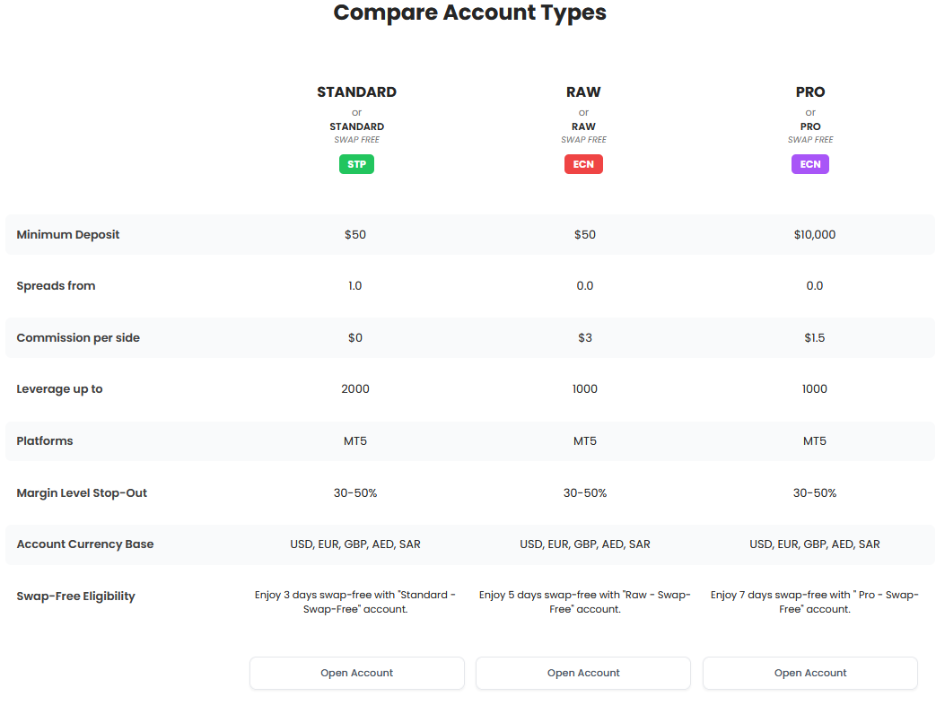
Account Type | Approximate Minimum Deposit | Key Conditions / Accessibility |
STP | 50 USD | Entry-level retail account with market access and commission-free pricing structure |
RAW | 50 USD | ECN-style account with tighter spreads and commission-based pricing |
PRO | 10,000 USD | Higher-tier account with improved pricing conditions and higher capital requirements |
Islamic | Varies | Swap-free account aligned with Islamic trading requirements |
Islamic Plus | Varies | Enhanced swap-free option with extended trading conditions |
Demo | Free | Practice account for risk-free trading and strategy testing |
All accounts operate under MetaTrader 5 (MT5) with fully digital onboarding and standard verification before live trading access.
The account framework is built around straightforward retail segmentation, allowing users to start from low-deposit entry tiers and progress into higher-capital accounts with improved trading conditions. Account creation is fully online and generally efficient, supported by a guided onboarding process within the client portal.
The 3 / 5 rating is assigned under the COR framework for “Moderately Differentiated and Accessible” accounts. The broker provides clear retail segmentation across STP, RAW, and PRO accounts, alongside Islamic and Islamic Plus options that improve accessibility for specific user requirements. A demo account is also available for practice trading, supporting beginner onboarding.
However, the structure remains primarily retail-focused, with limited differentiation beyond standard trading tiers and no clearly defined institutional or corporate account framework, which places it within the mid-tier classification for account variety and accessibility.
DB Investing’s additional service layer was reviewed based on platform features, auxiliary tools, and client programs available beyond core trade execution.
Available Additional Services
Copy trading via the DB Social app
Multi-currency wallet and payment app through DB Pay
PAMM account support
IB and affiliate programs
Educational hub including webinars, seminars, and market content
The service range covers several practical categories commonly used by retail traders. The broker offers a dedicated copy trading application, a standalone wallet and payment system for internal transfers and crypto-related activity, and managed account structures that extend participation beyond self-directed trading. Education is available as a supporting resource rather than a core service pillar.
More advanced infrastructure, such as API connectivity, institutional research tools, integrated analytics, or a native VPS service, is not clearly established. Traders requiring VPS support for MT4 or MT5 typically need to rely on external providers.
A 4/5 rating is assigned under the COR category “Broad Selection, Relevant, and Mostly Accessible.” The offering includes multiple functional services with reasonable accessibility, but lacks the deeper institutional-grade tools and infrastructure required for a top-tier score.
DB Investing’s corporate structure was reviewed using available legal disclosures, entity references, and publicly accessible company information. The group presents a multi-entity structure across several jurisdictions, with supporting references found in legal documents and company materials.
Disclosed Information
Multiple legal entities referenced across different jurisdictions
Group-level structure indicated in legal pages and disclosures
Entity names are identifiable at the operating level
Selected office locations are listed in the company materials
Information Gaps
No clear disclosure of ultimate beneficial ownership
No named board members or executive leadership structure
No published ownership breakdown or shareholding details
No consolidated corporate structure chart or governance framework
Limited independent verification of full group linkage across entities
A mid-tier score of 3 / 5 is applied based on the current level of disclosure. The structure is identifiable at the entity level and shows a broader organizational setup beyond a single registration. However, ownership control and governance are not presented in a complete or centrally verifiable format. Key details require cross-referencing and are not disclosed in a structured manner.
DB Investing’s geographic reach was assessed using disclosed office locations, regional activity, onboarding availability, and market access conditions. The broker presents a multi-region footprint with a focus on MENA and emerging markets, supported by both physical presence claims and digital service delivery.
Geographic Features
Presence and Reach | Details |
Operational Footprint | Offices or hubs referenced across Dubai, Seychelles, Cyprus, Nigeria, Egypt, Saudi Arabia, Canada, Mauritius, and Malta |
Market Coverage | Active across MENA, Africa, parts of Europe, and Asia |
Expansion Activity | Reported entry into Latin America with a Mexico office |
Client Access | International onboarding with jurisdiction-based restrictions |
Restricted Jurisdictions | EU, US, and other regions where onboarding is not permitted |
Service Model | A combination of regional presence and centralized digital servicing |
The broker demonstrates clear targeting of specific regions rather than uniform global coverage. Activity is concentrated in MENA and surrounding emerging markets, where localization efforts and regional visibility are more evident. Expansion into additional regions such as Latin America indicates ongoing growth, though access remains restricted in several major developed markets.
A 4 / 5 score is applied based on strong regional penetration and visible expansion activity. Localization and footprint are evident across key target markets. Full global coverage and deeper integration in major financial centers are not established, which keeps the rating below the top tier.
Upon navigating the broker’s website, the legal and policy documents are located under the “Legal Documents” section in the site footer. This serves as the central access point for all contractual and compliance-related materials.
Published Legal Documents Identified
Client Agreement / Terms & Conditions
Risk Disclosure Statement
Privacy Policy
Bonus and Promotional Terms
Conflict of Interest Policy
Complaints Handling Policy
These documents outline trading risks, client obligations, account conditions, and promotional rules. The Risk Disclosure covers leverage and CFD-related losses, while the Client Agreement sets the legal relationship between client and broker.
Each document was reviewed for clarity and usability. The coverage is complete and consistent, but the presentation is dense and heavily legal in nature. Information is spread across multiple documents without simplified summaries.
Bonus-related and trading-condition clauses are embedded within the main agreement rather than separated into clearer retail-facing explanations, which limits ease of understanding for non-professional users.
The broker provides full access to required legal documents and maintains basic transparency through centralized disclosure. However, readability and practical clarity are limited due to legal complexity and a lack of simplified breakdowns for key trading terms.
A 3 / 5 rating (Adequately Transparent & Accessible) is assigned under the COR framework, supported by complete documentation availability but constrained interpretability for retail users.
DB Investing’s trading fees were assessed using published account conditions, focusing on spreads, commissions, and swap charges across its main account types.
Account-Based Pricing Structure
Account Type | Pricing Model | Typical Trading Costs |
Standard (STP) | Spread-only | Spreads from 1.0 pip, no commission |
Raw (ECN) | Spread + commission | Spreads from 0.0 pips + 3 USD per side |
Pro (ECN) | Tight spread + lower commission | Spreads from 0.0 pips + 1.5 USD per side |
Swap charges apply to overnight positions, with rates varying by instrument and applied under a standard rollover schedule.
Pricing is clearly disclosed and segmented by account type. ECN accounts offer tighter spreads, but the total cost depends on commission. Overall pricing aligns with typical market ranges rather than leading low-cost benchmarks.
The fee structure is clear and functional, covering all core trading costs. However, pricing is not consistently low across account types, and cost advantages depend on account selection. Overall, these findings fit the score definition of 3/5: Average Fees & Standard Transparency.
DB Investing’s funding conditions were reviewed by examining its official payment disclosures and funding framework, focusing on broker-imposed charges, payment accessibility, and the transparency of deposit and withdrawal processes.
Funding Structure Overview
Funding Category | Fees and Details |
Internal Deposit Fees | None charged by the broker |
Internal Withdrawal Fees | None charged by the broker |
Payment Methods | Cards, bank transfer, e-wallets, crypto options |
Processing Times | Instant (e-wallets/crypto); 1–3 business days (bank transfers) |
Minimum Deposit | Around 100 EUR / USD / GBP, depending on the method |
Transparency | Funding terms disclosed on the official website; transactions executed via the client dashboard |
The review confirms that funding operations are structured around multiple standard payment rails, with availability spanning card payments, bank transfers, digital wallets, and crypto channels. Available deposit methods and fee policies are publicly disclosed, while the actual deposit and withdrawal actions are completed only after logging into the client dashboard, rather than through a public payment page.
No broker-imposed charges apply to deposits or withdrawals based on the published funding policy. Transaction timing varies depending on the selected payment method, with electronic channels typically processed faster than bank transfers, which follow standard banking settlement cycles.
All core funding parameters, including method availability and minimum deposit thresholds, are disclosed within the broker’s official payments documentation. Any external charges arising from banks or payment networks are not controlled or imposed by the broker.
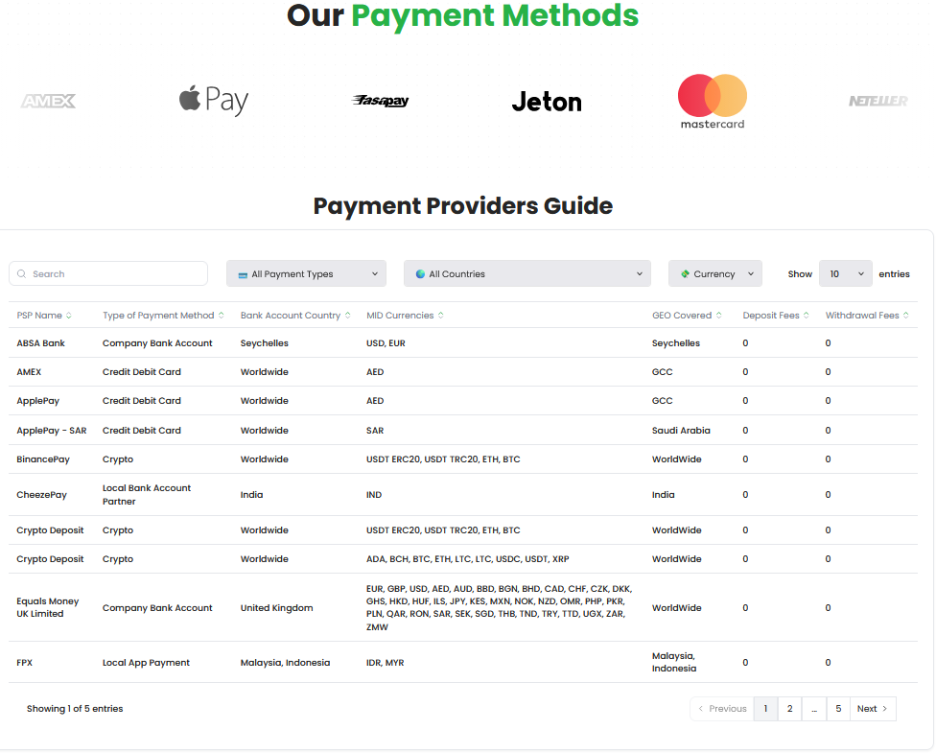
The funding framework is built around zero internal transaction fees, broad payment accessibility, and clearly stated processing conditions. This supports efficient capital movement without broker‑side cost friction and aligns with the highest category under the COR criteria for Deposit and Withdrawal Fees.
Based on published fee disclosures and legal documentation, the following non-trading fee conditions were identified:
Observed Non-trading Fee Conditions:
No inactivity or dormant account fees disclosed
No account opening, maintenance, or closure charges identified
No platform usage or subscription fees for standard accounts
No administrative charges for routine account services (statements or confirmations)
No broker-imposed fees for internal transfers indicated in available documentation
Currency conversion costs may apply depending on payment channel or base currency differences, handled externally rather than as a standalone broker fee
Available documentation does not indicate recurring account-level charges or penalty-based fees linked to account inactivity or standard servicing. Core account maintenance appears fee-free under normal usage conditions, with costs primarily arising only from external payment or currency conversion providers where applicable.
Fee information is distributed across multiple legal and policy documents rather than presented in a consolidated breakdown, which requires cross-referencing to confirm full clarity on non-trading charges.
Non-trading costs are largely absent at the account level, with no evidence of routine maintenance or inactivity penalties. While fee information is not presented in a single consolidated format, the overall structure remains low-cost and transparent in practice. This supports a 4 / 5 rating (Low Non-trading Fees & Transparent) under the COR framework.
DB Investing’s platform setup was reviewed based on cross-device accessibility, usability consistency, and overall stability of its trading environment.
Platform Overview
Platform | Availability | Quality / Function |
MetaTrader 5 (MT5) | Desktop, Web, Mobile | Core trading platform for execution, charting, and order handling |
DB Investing App | iOS, Android | Mobile trading and account management with integrated funding and chart access |
DB Social App | iOS, Android | Copy trading and social trading are linked to live accounts |
MT5 serves as the main execution engine, supported by proprietary mobile applications that extend access to account management and copy trading functions. The broker does not offer MT4 and operates exclusively on MT5 alongside its proprietary applications. Setup and login processes remain standard across devices, supporting straightforward access without technical barriers.
Platform use is consistent across desktop and mobile environments, with no recurring indicators of system-wide outages or persistent technical disruptions in public feedback. Most user concerns tend to relate to account or trading conditions rather than platform stability.
The structure remains centered on MT5 with supplementary apps rather than a wider ecosystem of independent platforms, which limits diversification in interface design.
Overall, the environment provides stable multi-device access and consistent usability, with reliable performance for standard trading activity. The rating is set at 4 / 5 (Very Good Stability, Broad Accessibility & Strong User Experience) under the COR framework, supported by stable operation and accessible platform design, while constrained by limited platform diversity.
As part of reviewing the broker’s overall trading environment, order execution behavior was examined closely across key areas that influence trade outcomes. The following points summarize the findings:
Order Execution - Orders are processed through an STP/ECN setup linked to external liquidity providers, with no stated dealing desk involvement. FIX API access is available, indicating support for more direct routing in advanced use cases.
Pricing Behavior - Prices are liquidity-driven, with fills dependent on available market depth at the time of execution. Under normal conditions, executed prices tend to stay close to quoted levels.
Execution Stability - Order processing remains consistent during regular market conditions, with no recurring indications of failed execution or abnormal delays observed in platform use or third-party testing.
Slippage Behavior - Price variation occurs during volatile periods, particularly around major market events. There is no disclosed breakdown between positive and negative slippage.
Order Handling - The MT5 environment supports standard order types, including market and pending orders. Execution outcomes are tied directly to liquidity availability.
Transparency of Execution Data - No published data is available on execution speed, fill ratios, or slippage metrics. This limits independent verification of performance under different market conditions.
Execution quality is adequate for general trading use, supported by stable order handling and a market-based routing model. At the same time, the absence of detailed performance reporting and unresolved concerns tied to trade outcome handling in certain cases prevents a stronger assessment.
This places the broker at a 3 / 5 level, where execution is functional and consistent in standard conditions, but lacks the transparency and measurable depth seen in higher-tier environments.
The broker’s analytical environment is primarily built around the native capabilities of MT5, supplemented by a limited number of add-on tools that support trade decision-making.
Trading Platform Tools (MT5):
Technical indicators
Multi-timeframe charting
Drawing tools
Expert Advisors (automated trading)
Built-in strategy tester
Market and Trading Utilities:
Signal Centre integration (in-platform trade ideas)
Supplementary Insights:
Platform tutorials and usage guides
Basic market-oriented content via website and video channels
Limitations:
No advanced market screeners or filtering tools
No proprietary analytics or sentiment indicators
No integrated trading calculators (position size, margin, risk)
No structured in-house research or daily analysis coverage
No portfolio-level analytics or performance tracking tools
The toolkit supports standard technical analysis and includes a basic signal feed, which adds some directional guidance. However, the overall depth remains close to a default MT5 environment, with limited expansion into advanced analytics or structured research.
A 3 / 5 rating is more consistent with the COR criteria. The tools are functional and accessible, but do not reach the “strong, advanced” tier due to the absence of deeper analytical infrastructure.
This sub-factor examines how the broker extends beyond core platform functionality through ecosystem development, integrations, and technology initiatives.
Innovations:
DB Social app enabling real-time copy trading and community interaction
Multi-app ecosystem separating trading, social trading, and payments
Mobile-first approach to account and trading access
Integrated Features:
FIX API access for algorithmic and institutional trading
Copy trading infrastructure with strategy allocation and performance tracking
DB Pay system supporting fiat and crypto wallet functionality
An interconnected environment linking trading, funding, and social features
The broker demonstrates active development through its multi-app structure and copy trading system, supported by API access for more advanced users. This indicates ongoing investment in platform expansion rather than reliance on a single trading interface.
At the same time, integration coverage remains selective, particularly with the absence of widely used third-party tools and a limited developer ecosystem.
A 4 / 5 rating remains appropriate. The platform shows clear progress in innovation and integration, exceeding basic industry standards, but it does not yet match the breadth and depth of top-tier multi-platform ecosystems.
Customer support quality was assessed by reviewing availability, communication channels, response behavior, and issue resolution performance across standard and escalated client interactions.
Availability:
Live chat access is promoted as 24/7, although availability appears inconsistent during certain hours
Designed to accommodate a global client base
Channels:
Live chat via website
Email support
Regional phone lines, including Seychelles and Dubai
Response Speed:
Live chat generally responds within a short period for standard inquiries
Email responses are handled within normal expected timelines
Assistance Quality:
Structured responses for account setup, platform use, and general operational queries
Support staff demonstrate working knowledge of core services
Accuracy and Clarity:
Information is generally consistent with official broker documentation
Standard processes are explained in a clear and direct manner
Issue Resolution:
Routine account and platform concerns are usually resolved without escalation
More complex or high-impact cases show inconsistencies in handling, including delayed responses and unresolved outcomes in certain instances
User Feedback:
Based on community-level review of user feedback within our internal research sources, experiences appear mixed. Routine interactions, such as onboarding and basic platform assistance, are often described as responsive and efficient. However, recurring concerns are noted in cases involving withdrawals and account disputes, where users report delays and inconsistent communication during escalation.
Support accessibility remains strong across multiple channels, and basic queries are handled reliably. Performance becomes less consistent when cases require deeper investigation or involve sensitive financial outcomes.
A 3 / 5 rating is assigned under the COR framework. The support system meets standard expectations in availability and responsiveness, but inconsistency in handling complex and escalated issues places it within the “Adequate Customer Support” tier
To assess the broker’s educational offering, the available materials were reviewed in terms of structure, depth, consistency of updates, and coverage across trader skill levels.
Learning Materials Available
Free Academy covering basic trading concepts and introductory market topics
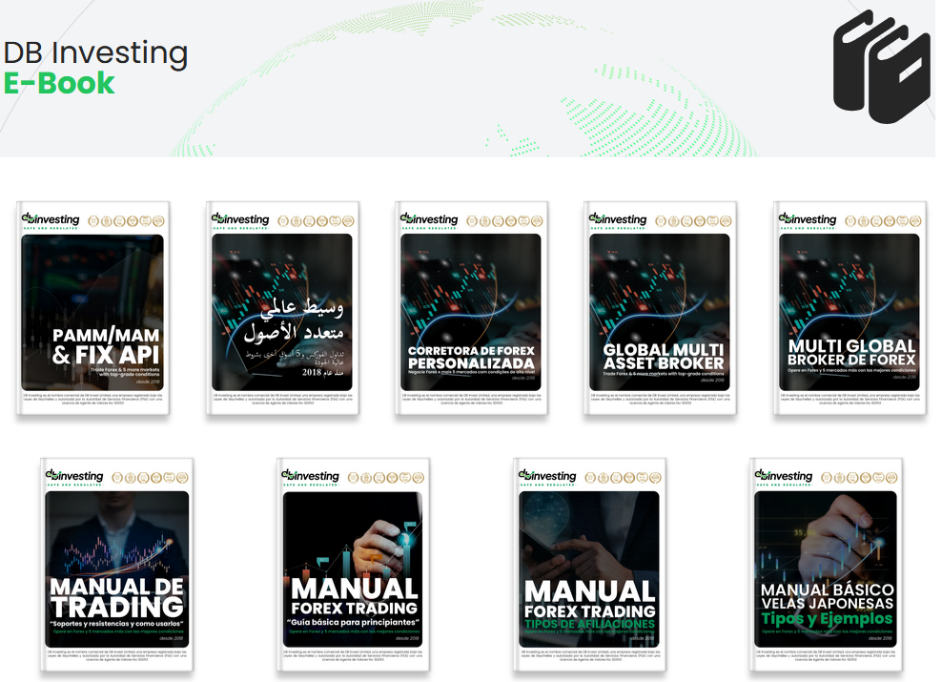
Forex ebooks available in Spanish, Arabic, and English.
Articles covering forex and CFD fundamentals
Video tutorials on MT5 usage, account setup, and platform navigation
YouTube-based guides reinforcing onboarding and platform usage
Live Education & Market Updates
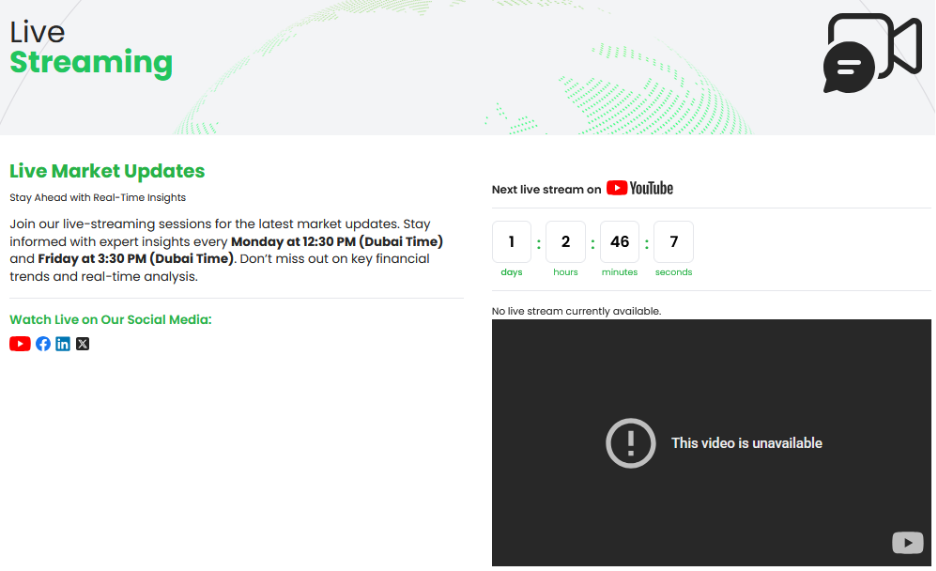
Scheduled live streaming sessions providing real-time market updates
Expert-led sessions are held every Monday and Friday with market commentary and analysis
Periodic webinars and seminars conducted by in-house personnel
Event-based educational sessions without a fixed or structured calendar
Structure & Accessibility
Educational materials are freely accessible across multiple channels
Content is distributed across ebooks, videos, live streams, and articles rather than a unified learning pathway
Strong focus on onboarding and platform usage rather than structured skill progression
Limited depth in intermediate and advanced trading concepts, such as strategy building or trading psychology
Updates exist, but are periodic rather than consistently structured or curriculum-driven
The 3 / 5 rating remains appropriate under the COR framework for “Adequate, Standard & Regularly Available Educational Content.” The broker provides a functional range of learning resources, including ebooks, tutorials, articles, and scheduled live market updates, which support beginner traders and platform onboarding effectively.
However, the educational ecosystem remains fragmented across multiple formats without a structured curriculum or defined learning progression. Coverage of advanced trading topics is limited, and the absence of a consistent, tiered educational framework restricts depth for more experienced traders, keeping the offering within the mid-tier classification.
The broker’s community layer was assessed by reviewing its social trading infrastructure, communication channels, partner-driven engagement systems, and supplementary trader-facing services. The ecosystem extends beyond basic trading support through a mix of copy trading, social engagement tools, and promotional programs that encourage ongoing platform interaction.
Social Trading Network
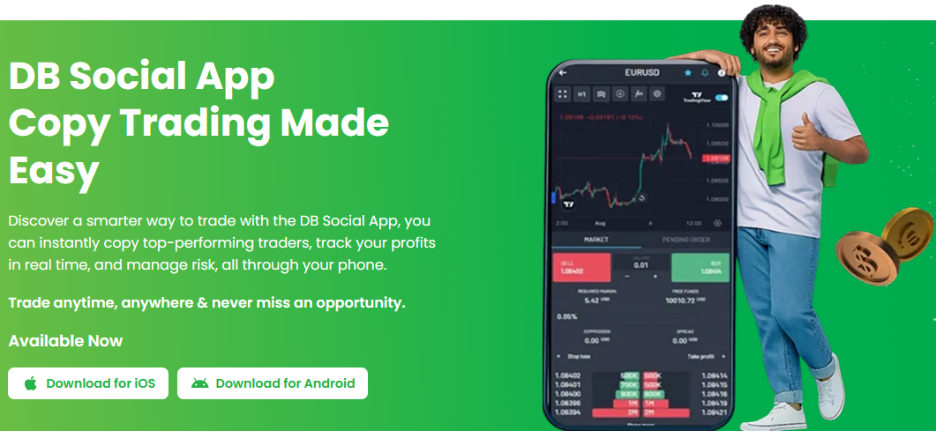
DB Social app enables copy trading across live accounts
Performance-based rankings and leaderboards for strategy providers
Trader selection supported through visible performance metrics
Fund allocation can be directed to selected strategies within the app
Engagement is centered on replication of strategies rather than open discussion
Communication Channels
Official Telegram channels used for updates and announcements
Social media platforms provide platform news and periodic updates
Communication flow is primarily broadcast-based rather than forum interaction
Copy Trading & Ecosystem Tools
Integrated copy trading system within DB Social
Strategy performance tracking and allocation tools
Regional partner and IB structures support network-based trader expansion
Community activity is distributed across app functions and partner ecosystems
Supplementary Trader Services & Promotions
Profit Bonus Rewards offering up to 12% annual return on idle wallet balances, credited daily under qualifying trading activity conditions
Traders' Cashback program providing up to $3 per traded lot as volume-based rebate incentives
The Entertainer Membership offering lifestyle rewards such as Buy 1 Get 1 offers across the UAE and Saudi Arabia, available through trading activity or testimonial participation
Testimonial-based reward system granting access to premium membership benefits upon submission of video content
Seasonal campaigns, including Ramadan Offer, featuring deposit bonuses and bundled lifestyle perks
Welcome Bonus referenced in promotions, though availability appears inconsistent based on access issues during review
The structure shows a strong emphasis on engagement through copy trading infrastructure and incentive-based participation. Community interaction is less discussion-driven and more ecosystem-oriented, relying on app-based functionality, promotional participation, and partner networks rather than centralized forums.
A 4 / 5 rating under the COR framework is justified. The broker demonstrates strong integration of social trading and trader incentive systems, placing it above standard brokerage engagement models, although the absence of a unified community forum and deeper interactive trading discussions limits further elevation into the top tier.
Based on the review of the broker’s onboarding and account administration flow, the system is structured for relatively smooth account creation and day-to-day management. The process follows a standard retail brokerage setup with minimal friction from registration through activation.
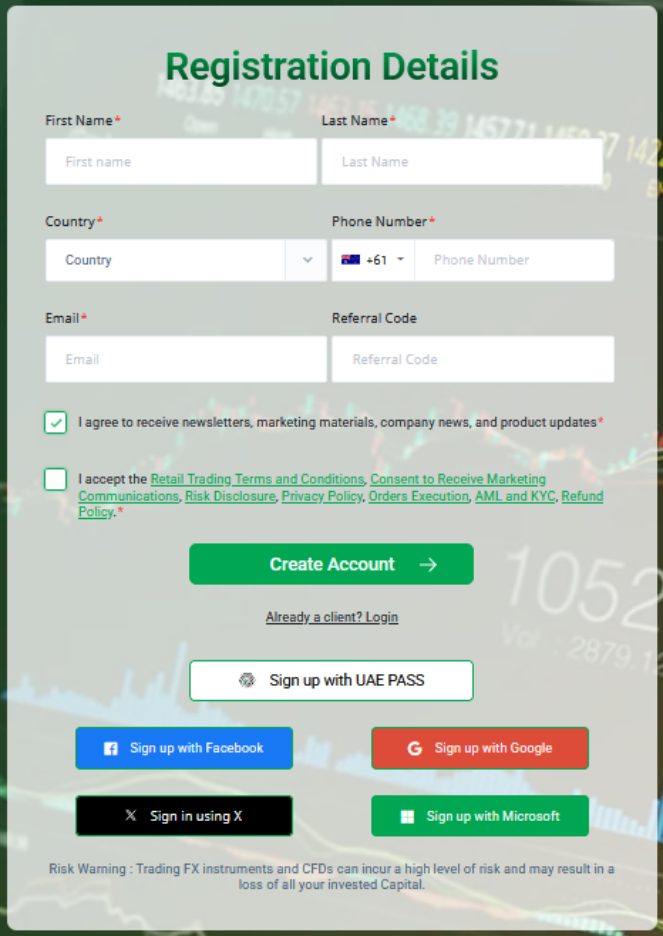
Step 1: Account Registration
Account creation starts with an online registration form requiring basic personal details such as name, email, and phone number. Access to the client area is granted shortly after submission via email or OTP verification.
Step 2: Identity Verification (KYC)
KYC verification is completed inside the client portal. Users are required to upload standard identification documents, including proof of identity and proof of address. The upload process is guided, and verification is typically completed within a short processing window based on observed onboarding flow descriptions.
Step 3: Client Dashboard Activation
Once verification is completed, users gain access to the client dashboard. This area serves as the central account hub for viewing account status, creating additional trading accounts, and managing basic profile settings.
Step 4: Account Management Controls
Within the dashboard, users can manage core account settings such as account type selection, leverage adjustments, and security-related updates. These functions are handled directly within the interface without requiring external support intervention.
Step 5: Funding and Account Operations
Deposits and withdrawals are processed through structured request forms inside the client area, with transaction status visibility available. Account activity and balances can be monitored in real time through the same dashboard interface.
The onboarding flow is straightforward and functional, with clear steps from registration to full account access. The system supports basic self-service management without unnecessary complexity, although it does not introduce advanced account management tools beyond standard brokerage functionality.
From a COR perspective, the experience aligns with the Efficient, Clear & User-Friendly, which aligns with the 4/5 rating. The broker delivers a smooth and practical account setup process that supports quick activation and stable account management, while remaining within a standard industry-level framework rather than an advanced or highly optimized onboarding system.

The TRU Comprehensive Organization Rating (COR) is an evidence-based scoring framework that evaluates a company across key dimensions that matter to traders and platform users. It is designed to provide a standardized and objective view of a firm beyond popularity or isolated user opinions.